Social media is filled with posts warning that blending bananas into smoothies with berries will negate the drinks’ nutritional benefits. But those claims are based on a small study that looked at the uptake of just one heart-healthy compound found in berries. Experts continue to recommend smoothies as a way to increase fruit consumption among Americans.
“Just found out you can’t put bananas in your smoothie because apparently there’s an enzyme in the banana that breaks down all the nutritional value of the berries,” said “@CaucasianJames,” a comedy content creator, in a May 28, 2026 post on TikTok.
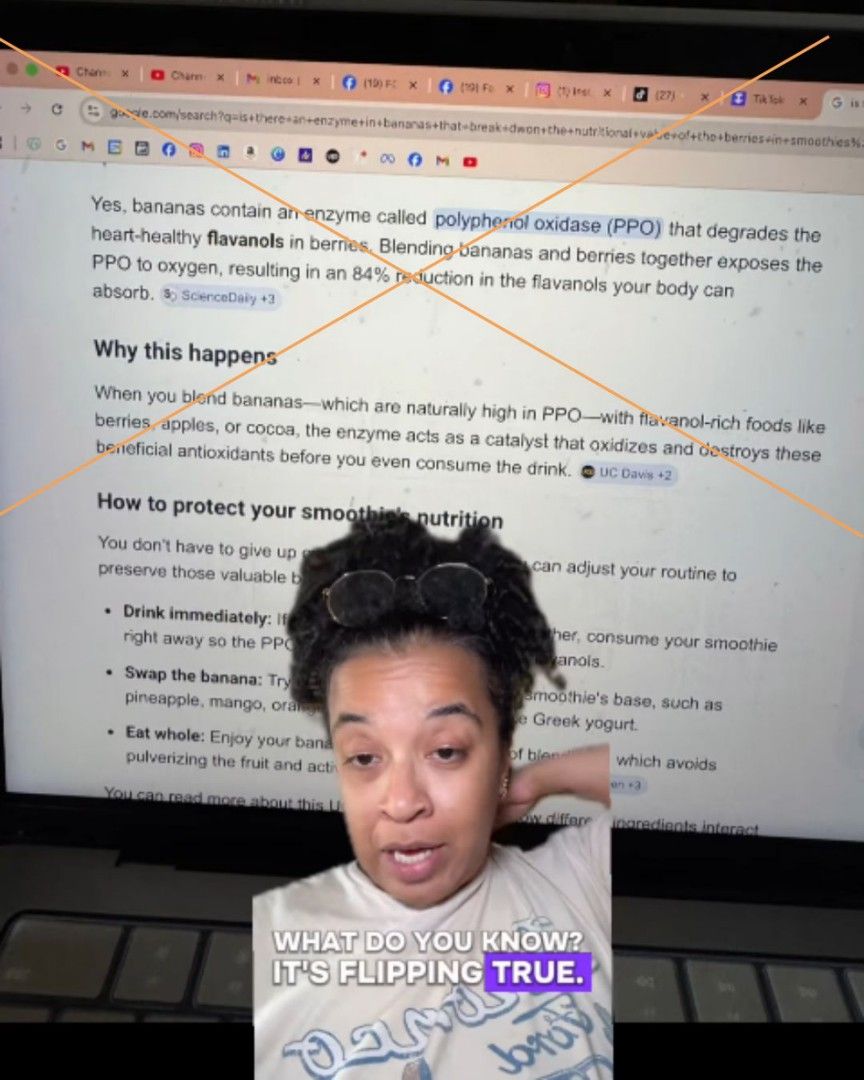
His video, which has more than 17.5 million views, spawned numerous other posts warning people not to put bananas in smoothies, including an Instagram reel where a skeptical influencer becomes convinced by reading a Google AI search summary on the topic.

The posts follow new “Dietary Guidelines for Americans” from the US Department of Agriculture and US Department of Health and Human Services, which recommend consuming two cups of fruit per day, based on a 2000 calorie diet, and suggest smoothies as a strategy to increase consumption (archived here, here and here).
The Centers for Disease Control and Prevention found that only 12.3 percent of US adults met fruit intake recommendations in 2019 (archived here).
But nutrition experts say the online claims warning against adding bananas to smoothies — based on a 2023 study in the Royal Society of Chemistry’s journal Food & Function — are missing key context (archived here).
Study findings
The 2023 study focused on flavan-3-ols, a compound in berries and other plant-based foods that benefits cardiovascular and cognitive health.
The Academy of Nutrition and Dietetics has recommended 400 to 600 milligrams daily of flavan-3-ols, also called flavanols, to reduce the risk of cardiovascular disease (archived here).
The 2023 experiment sought to understand how polyphenol oxidase (PPO), the enzyme responsible for the browning of fresh fruits, influenced the intake of flavan-3-ols when high-PPO fruits were added to smoothies (archived here and here).
The researchers examined bananas because they have naturally high PPO activity.
However, the smoothies used in the study did not blend bananas with berries. Instead, researchers compared flavanol levels in volunteers who drank a banana smoothie — or a banana smoothie alongside a berry smoothie — with those who only drank a berry smoothie.
They found that subjects who also consumed the banana drinks had lower flavan-3-ol levels in their bloodstream than those who drank only berry smoothies.
Study author Javier Ottaviani, director of the Mars Edge Core Laboratory at the University of California, Davis, told AFP in a June 12 email that “bananas remain a great option for smoothie preparation, but not if you want to maintain the flavanols” (archived here).
But independent expert Angie Tagtow, former executive director of the Department of Agriculture’s Center for Nutrition Policy and Promotion (archived here), pointed to shortcomings of the study, including its small sample size of eight men with no female subjects.
She also noted that the paper received funding via a grant from Mars Incorporated, a major player in the food industry (archived here).
Tagtow said in a June 10 email that because nutrients, vitamins and minerals have varied health impacts and interactions in the body, a research study focused on a single combination cannot assess the overall healthiness of a dietary pattern.
Bananas contain healthy minerals including potassium and calcium as well as vitamins A, C, and B-complex, according to a 2023 pharmacological review. They encourage healthy digestion and kidney function, prevent muscle cramps and promote cardiovascular health.
Berries contain fiber, with strawberries, blackberries and raspberries also offering strong sources of folate and potassium, blueberries proving rich in vitamin K and cranberries providing vitamin E (archived here).
The University of Reading’s Gunter Kuhnle, another co-author of the 2023 study, said in a June 3, 2026 email to AFP that PPOs do not break down any vitamins or minerals in the berries (archived here).
Read more of AFP’s reporting on health misinformation here.

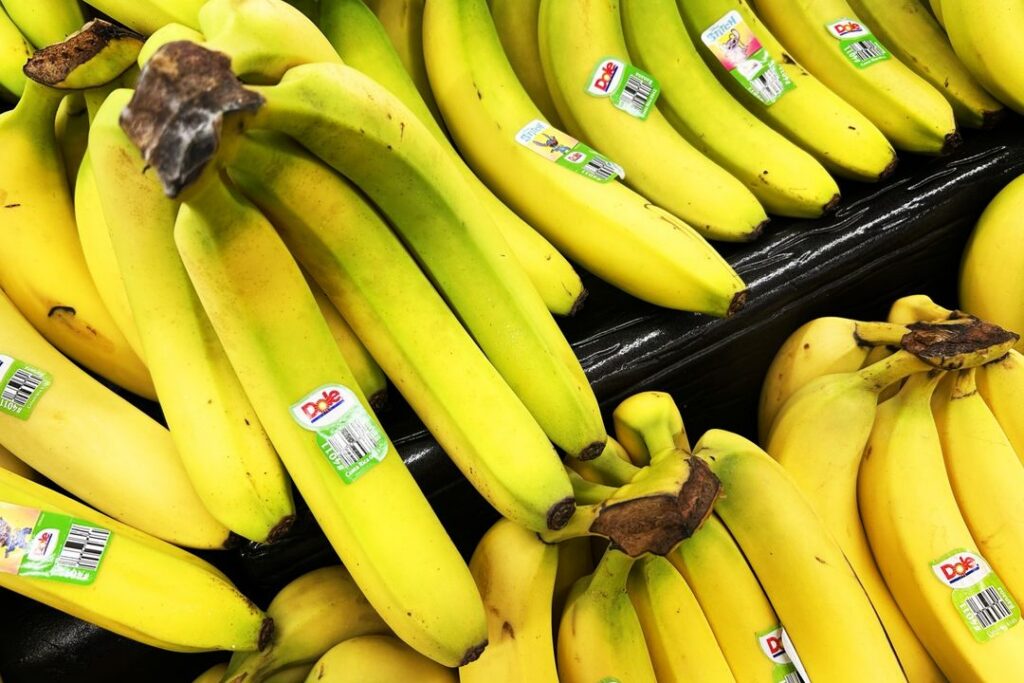
Bananas for sale at a supermarket – Jim WATSON / AFP
© AGENCE FRANCE-PRESSE | 2026 | All rights reserved. Any use of AFP content on this website is subject to the terms of use available on CGU. By accessing and/or using any AFP content available on this website, you agree to be bound by the aforementioned terms of use. Any use of AFP content is under your sole and full responsibility.
Originally published here.