Claim: No other country has a similar constitutional provision, which will have a negative effect on customs and traditions.
Verdict: Several countries make the right to a clean environment a legally enforceable right in their constitutions. Lawyers say the provision could be used as a legal tool when challenging traditional activities, but these activities can already be challenged under existing laws.
A proposed amendment to enshrine the right to a clean and healthy environment in Malta’s constitution raised a furore on Thursday October 2 after it was presented in parliament by Darren Carabott, an MP for the opposition party PN and shadow minister for home affairs and security.
Labour MPs took turns in criticising the bill, promptly announcing a green paper to introduce legal protections of their own.
Meanwhile, several NGOs and sports associations warned of the potentially negative repercussions of the bill to customs and traditional activities.
However, the debate quickly became clouded by questionable claims about how environmental protections are implemented around Europe and the possible consequences of the bill.
What did the proposal say?
PN’s proposed amendment made a handful of changes, the most significant being the addition of a new clause in the constitution’s section on rights to say that “all persons in Malta shall have the right to live in a clean, healthy and sustainable environment”.
In practice, this means that each individual would have a fundamental right to clean air, water and land.
The proposal adopted a broad understanding of the term “environment,” saying it also includes “social conditions, aesthetic coherence and cultural attributes”.
Borrowing the wording from another clause in the constitution, it also says that every person shall have the right to redress for any breach of this right, without having to show a personal interest in the matter.
Is PN’s proposal unique?
In a video published by Labour on Thursday, MP Edward Zammit Lewis argued that across the EU, “there isn’t a single country that has a law like that proposed by PN”.
“Even the EU Charter on Fundamental Rights does not recognise a direct right to the environment, because there are repercussions on industry, on sports, on traditions,” Zammit Lewis said. “So PN is presenting something that doesn’t exist anywhere else, not even in the Convention on Human Rights”.
This is not entirely the case.
According to a 2019 United Nations report, 19 out of the 27 EU member states have enshrined the right to a healthy environment in their constitution, albeit some less directly than others.
If we look further afield, around 110 countries across the world protect the right to a healthy environment in their constitution, in some way or other.
However, while some adopt clauses similar to those in PN’s proposed amendment, several stop short of naming the right to a clean environment as a direct individual right.
Nevertheless, an analysis by renowned environmental lawyer David Boyd found that, as early as 2011, the right to a healthy environment was recognised explicitly in the constitutions of over 90 countries around the world and “recognised as an implicit and enforceable constitutional right in at least twelve additional countries”.
Meanwhile, a study by the David Suzuki Foundation, a Canada-based think tank, found that at least 98 countries around the world “recognize that citizens have a substantive right to live in a healthy environment”
These also include some European nations, the study finds, such as Belgium, which lists “the right to the protection of a healthy environment” alongside other fundamental economic, social and cultural rights, and Greece, which says environmental protection is “a right of every person”.
Furthermore, several of the countries that had not enshrined this right, including Malta, have signed up to legally-binding international treaties, such as the Aarhus Convention, that make this right legally enforceable.
Some have gone a step further, borrowing legal concepts from traditional communities to grant specific natural entities legal personhood.
In 2022, Spain became the first EU member state to enact such a law, giving the Mar Menor lagoon, Europe’s largest saltwater lagoon, its own legal rights.
However, Zammit Lewis is right to say that the EU Charter on Fundamental Rights stops short of naming the right to the environment as an individual right, describing it as a guiding principle, rather than a directly enforceable right.
That is not to say that no international body recognises the environment as a human right.
In July 2022, the United Nations adopted a landmark, albeit non-binding, resolution recognising “the right to a clean, healthy and sustainable environment as a human right”.
On that day, Malta was one of 161 countries to vote in favour of the resolution.
PN proposal follows PL 2017 manifesto pledge
PN’s proposal also isn’t entirely new in Maltese political circles, having first been announced by the party over two years ago, in June 2023.
In 2017, the PL itself had included a promise to ensure that “environmental protection, the right to clean air and environmental health, as well as the right for environmental action are enshrined in the Constitution” in its electoral manifesto.
That electoral promise came to pass, with the government adding a clause to the constitution in 2018 which bound the State to “protect and conserve the environment” and to take measures to combat environmental degradation, “including that of air, water and land, and any sort of pollution problem”.
However, legal experts pointed to the fact that the clause was added to the constitution as a declaration of principle, not as a fundamental right.
Law professor Kevin Aquilina told Times of Malta that this means that the current provision is “totally unenforceable and practically of no utility”.
The PN proposal would make the right to a clean environment a legal weapon which can be invoked directly in legal action and used in court proceedings.
Would this really spell the end for Malta’s traditions?
Several government figures, from Justice Minister Jonathan Attard to Culture Minister Owen Bonnici warned that the amendment could bring in a raft of new lawsuits which would curb anything from traditional activities to sporting and economic activities.
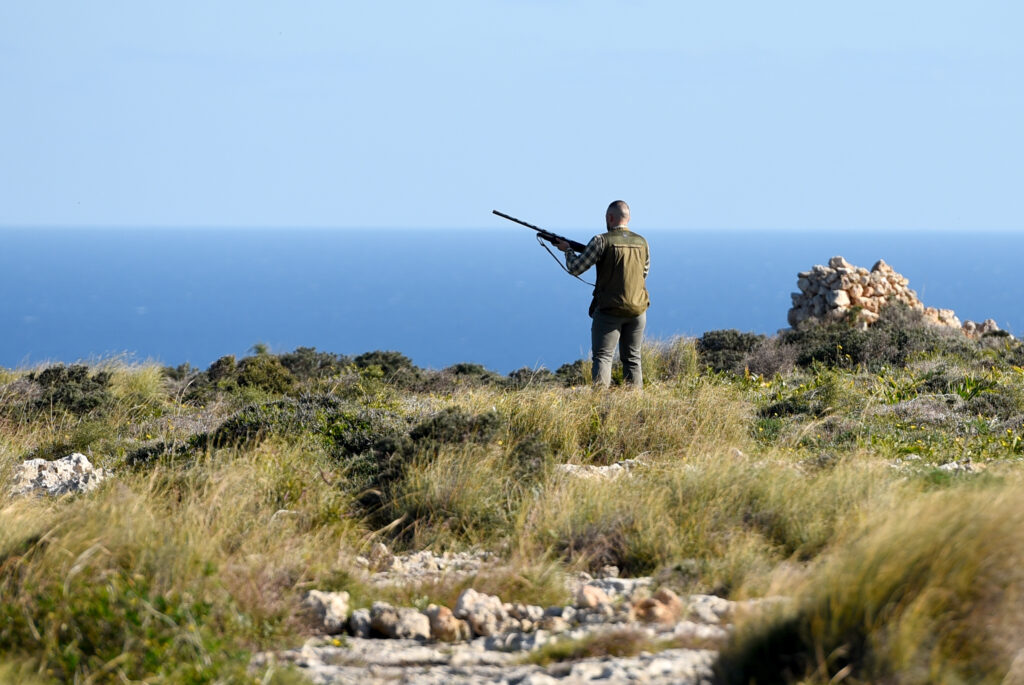
Things are not quite so clear cut, as the ongoing tug-of-war between constitutional protection of the environment and traditional practices around the world attests.
Several European countries have seen constitutional provisions cited in legal proceedings, from efforts to stop bear and wolf culls in Slovenia, to calls to cease mining activity in Greece.
However, the weight given to these provisions within these proceedings is typically a matter of legal interpretation, making it difficult to predict how Maltese courts would handle affairs.
To complicate matters further, the PN proposal includes “cultural attributes” in its definition of the environment. This suggests that anybody practicing a traditional activity could potentially also argue that their activity is granted constitutional protection, given that it may be potentially be considered a cultural attribute.
In any case, constitutional lawyers told Times of Malta, some of the fears over whether the proposal would spell the end for traditions may be misplaced, given that several traditional activities could already potentially be challenged under existing laws, including the Constitution, given the right circumstances.
Aquilina said that “while there will be certain human activities that can be adversely affected through the introduction of such a human right,” the proposal addresses the “deleterious effects” of such activities, not the activities themselves.
“Nowhere does the constitutional amendment propose the abolition of hunting and fireworks,” Aquilina says, adding that “these activities can still be regulated today under ordinary law”.
Likewise, a UN report on environmental rule of law points out that European courts have frequently found that harm to the environment directly led to the violation of fundamental rights, such as the right to life or property.
Some have already tried going down a similar route in Malta.
In 2005, a Maltese family took to the courts to argue that the fireworks being let off close to their home was in violation of the law. An initial victory was eventually overturned by the Constitutional Courts.
The family later unsuccessfully took the case to the European Court of Human Rights to argue that the fireworks violated their right to private and family life.
Similarly, other traditional activities in Malta, such as spring hunting and trapping, have been declared illegal by European courts on the back of EU legislation, as has been the case in other European countries.
For instance, France’s constitutional protection of environmental rights was frequently cited by critics of the country’s traditional practice of using glue traps to capture songbirds.
However, ultimately, it was EU legislation that brought the practice to an end, not the country’s constitutional provisions.
Verdict
PN’s proposal to enshrine the right to a clean environment as a fundamental right has several parallels, both in Europe and around the world, although several other countries stop short of naming it a direct right.
Constitutional protections are frequently used around the world as tools in the battleground between environmental protection and the practice of long-standing traditions.
While the addition of a new provision in Malta’s constitution could also be used in this way, legal experts say that traditional activities can already be challenged under existing laws.
The Times of Malta fact-checking service forms part of the Mediterranean Digital Media Observatory (MedDMO) and the European Digital Media Observatory (EDMO), an independent observatory with hubs across all 27 EU member states that is funded by the EU’s Digital Europe programme. Fact-checks are based on our code of principles.
Let us know what you would like us to fact-check, understand our ratings system or see our answers to Frequently Asked Questions about the service.

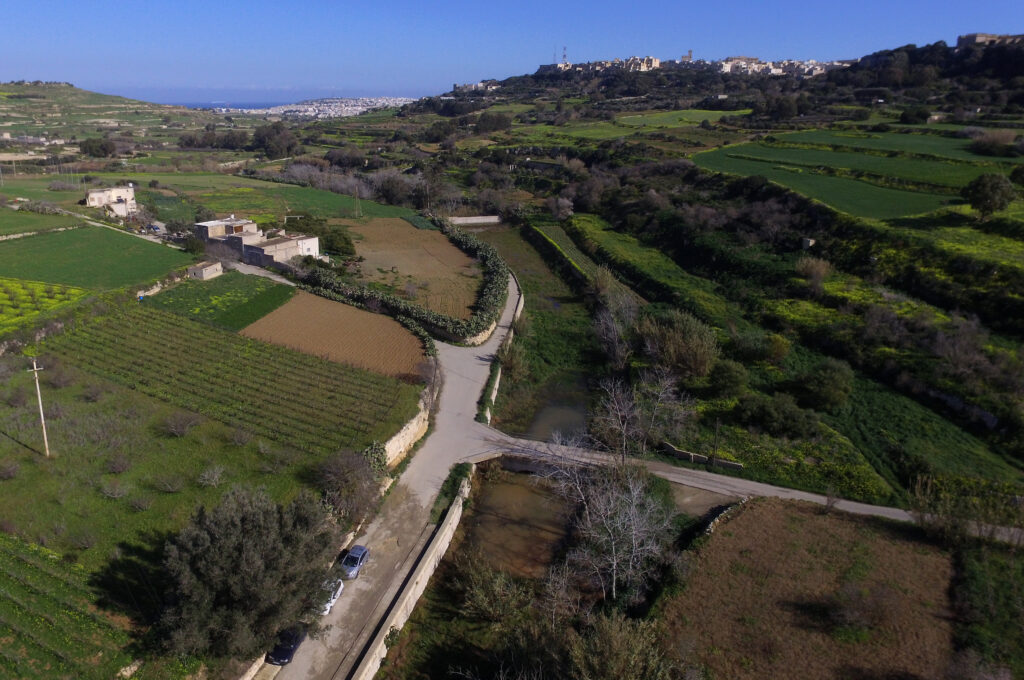
A PN proposal to change Malta’s constitution faced criticism from government benches. Photo: Wikimedia Commons/DipiPhoto
Environment, Fact Check, Politics
Copyright 2025 Times of Malta. All rights reserved.
Originally published here.